Unlocking the Canadian University Experience


Canada has been one of the popular destinations for our students to study abroad for many years. The quality of higher education in Canada is renowned worldwide. Their co-op programme is also highly favoured by international students as they can access excellent job resources and gain valuable work experience before graduating. We have previously published some articles related to the co-op programme and the alumni have praised its value to them ("Alumni Insights on Career #BestFit", "Leting Xue: I Know How to Grasp Opportunities"). In this edition, we focus on interviewing alumni to share various aspects of their university studies and life, aiming to provide firsthand information about studying in Canada to our readers.
Learning Environment
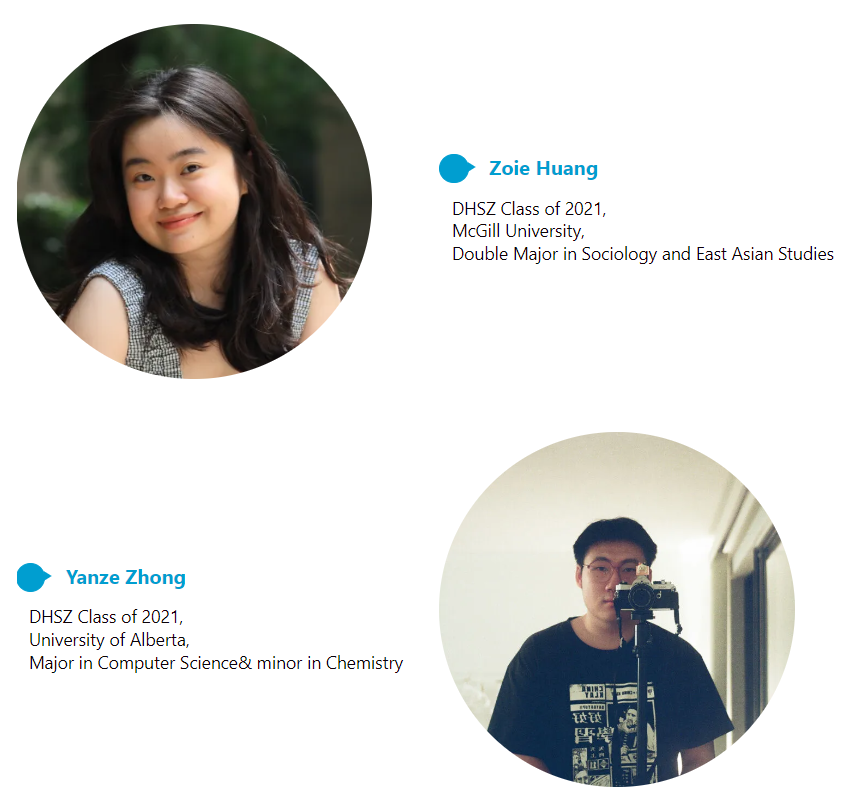
Zoie
McGill University is known for its rigorous academic environment and is highly suitable for students who enjoy learning. For students with a strong academic pursuit, the university allows for majoring in multiple disciplines or combining majors with minors. Additionally, the grading system is very student-friendly, as there is no intentional curve grading. If you study diligently, your achievements will not be affected by other students' performances. Furthermore, the class sizes are diverse, primarily categorized into three types: large lectures with 100-200 students, medium-sized classes with around 50 students, and small seminars with 10-15 students. Personally, I prefer seminars, which last for three hours per session and mainly involve discussions among students and with the professor. The topics can be explored in depth, greatly enhancing oral communication skills and allowing the professor to get to know me better. Since I plan to pursue further studies, obtaining high-quality letters of recommendation from professors is crucial to me.
Yanze
The University of Alberta offers a challenging academic experience as it allows students to pursue multiple majors and minors. Students are also allowed to adjust their coursework and even change their majors in their senior year. If a major change causes a delay in graduating within four years, the university permits students to extend their graduation timeline. Personally, I am majoring in Computer Science with a minor in Chemistry. This combination will provide me with various career options in the petroleum industry as it has been the primary industry in Alberta and has provided great job opportunities.
Living Environment
Zoie
McGill University’s main campus is on the slope of Mount Royal in downtown Montreal in the borough of Ville-Marie. Attending classes everyday requires walking up and down the hill to different buildings, which is good exercise for me. However, sometimes I might run late between classes given the short break and long commute. My professors are understanding of this situation and flexible if I email them.
Regarding accommodation, I lived on campus in my first year and moved out to live on my own in my second year. Rent in Montreal is relatively cheaper compared to other major cities in Canada. For example, my friend who shares an apartment with another person in the suburbs of Toronto pays more. I rented an apartment located in the downtown area, and there is a subway station downstairs, making transportation very convenient.
In terms of dining, sometimes I eat at the cafeteria. The university cafeteria upgraded its meal plans last year, allowing us to have more options and save money when eating less. Sometimes I cook for myself, and I can order Chinese ingredients online from T&T Supermarket. There are also many Asian restaurants near my apartment, especially good Sichuan cuisine, as well as some delicious Korean and Japanese restaurants. Occasionally, when I don't feel like cooking, I eat outside.
Lastly, in terms of safety, the university campus is safe, and the area where I live is also very safe during the day. However, at night, it is advisable not to walk alone and taking a taxi is highly recommended.
Yanze
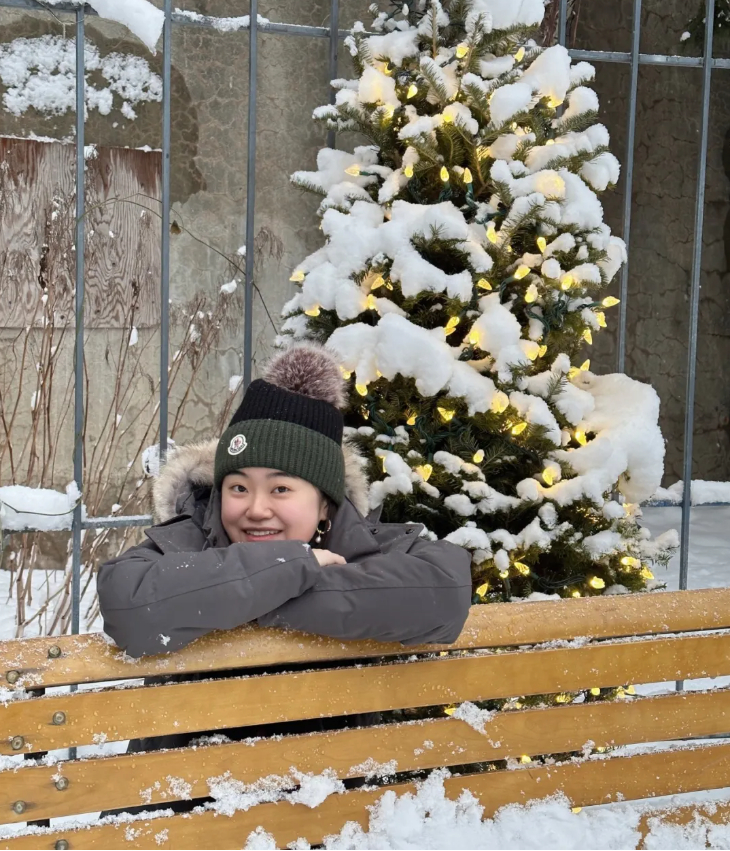
The University of Alberta is located in Edmonton, the capital city of Alberta province. Compared to Suzhou, Edmonton is quite small, and city life is relatively quiet. The city experiences very few violent crimes, perhaps it's because the weather here is colder, which contributes to a higher level of safety. Our winter lasts from October to April of the following year, and the temperature can drop as low as negative forty degrees Celsius. The days are also shorter, and there is heavy snowfall. However, the locals have a strong adaptability to extreme cold weather, and classes are rarely cancelled due to snow.
Campus life at the University of Alberta is vibrant and diverse, offering a wide range of activities such as sports, festivals, parties, and interest-based clubs. Some of the activities I frequently participate in are similar to those I had in high school, such as dodgeball, photography clubs, and fitness activities. I participate less in party-related events. Maintaining a regular and healthy lifestyle is crucial for enduring the long winter days.
Lastly, Alberta province is home to Canada's first national park, Banff National Park. Although it's not close to Edmonton, it's worth visiting multiple times. If you come to Alberta and enjoy natural landscapes, be sure to visit Banff.

Choosing Course/Major
Zoie
As I received 30 college credits with my A-level results, I was able to skip the first year of coursework and entered directly into the second year at McGill to study my major. As a result, I am not particularly familiar with the major selection system at McGill. Initially, I chose Sociology as my major, with minors in Psychology and East Asian Studies. However, after taking a few psychology classes, I realized that I wasn't very passionate about it, so I gave up the minor and switched to a double major in Sociology and East Asian Studies. It is convenient to change majors within our department, but I'm not sure about switching across departments. Here, I would like to give some advice to incoming freshmen at McGill: make sure to familiarize yourself with the graduation requirements of your chosen major in advance and ensure that you complete all the mandatory courses in a timely manner. I have a friend who was a bit late in realizing this and only discovered in her senior year that she hadn't taken several mandatory courses for graduation. She had to rush to make up for them, which caused a lot of stress.
Yanze
Speaking of course selection, I would like to share a mishap of mine. Initially, I was admitted to the engineering department. However, after starting at Alberta, I was notified by the admissions department that I couldn’t enrol in engineering as I hadn't taken chemistry in my A2 level since I dropped it in Y13, and this information was included in my university application. A complete A-Level Chemistry is required for studying engineering. As a result, I was forced to transfer to the Faculty of Science to pursue a computer science major. Fortunately, I had studied A-Level Computer Science in high school, so the foundational courses in computer science were relatively easy for me. In a way, it wasn’t too bad to change the major. As mentioned earlier, our school has a flexible system for choosing, combining, and adjusting majors. College credits can also be awarded to certain A-level subjects with a grade B or above.
Advice for Students
Zoie
I suggest delving deeper into your interests. I spent most of my time on studying in high school and kept this lifestyle at university as well. The downside of always studying like this is that when my academic performance doesn’t meet my expectations, I will feel extremely disappointed and stressed. By allocating some time and energy to pursue my hobbies in-depth, I can maintain a balanced life and derive emotional value from the experiences and accomplishments gained through those non-academic experiences, mitigating the stress and anxiety that come from studying. Of course, some people might be able to turn their hobby into a career, which is even better.
Yanze
One suggestion is to be cautious of the "academic integrity" risks that may arise when providing academic support to friends or classmates at university. In my freshman year, I would occasionally help classmates who were struggling with their assignments by providing guidance and suggesting improvements because I had already studied computer science in high school. However, there was one incident where a classmate directly submitted the code I had written as his own. Consequently, both of us were accused of academic misconduct. Later, I had to write an appeal letter of over two thousand words to the professor to avoid this penalty and I succeeded. Looking back, I was lucky in that incident. I would like to raise your awareness again that it is crucial to keep your academic honesty and don’t put yourself at risk for the sake of helping others.