Dulwich Scholars | Your academic enrichment to elite university

Mr. Steve Hodgkin, an alumnus of Cambridge University (he read Geography at Fitzwilliam College), is the Geography, Liberal Arts Teacher, Head of Counselling at Dulwich International High School Suzhou. He is also the academic coordinator of the recently launched Dulwich Scholars Programme.
In this article, he introduced his recapitulation on the meaning and purpose of the Dulwich Scholar’s Programme, the tremendous support that DHSZ Oxbridge applicants have received from Dulwich College London, as well as his personal experience studying at Cambridge.
“The Dulwich Scholars Programme is incredibly important, as it is all about elite university preparation and academic enrichment. The Scholars Programme is by invitation only. Only students with the highest zhongkao scores in year 10 and students with the highest proven records of assessment in years 11, 12 and 13 are invited to join.
They are invited to take part so that we can stretch them, and do things beyond the curriculum, which is both difficult and challenging for them. What we are not doing is test preparation. We are not teaching them anything subject related. We are trying to embed all the soft skills which are necessary for success at university in the future. One of them is critical thinking beyond the textbook. Another is extensive reading, also beyond the textbook, which is why we have a separate Scholars Programme section in the school library. We are getting them reading, thinking, speaking, and writing.

Everything we are doing is ultimately based on university admissions and interviews. It’s also about giving students the skills to succeed when they get a place at an elite university. We pull together all the soft skills that they will need to succeed in the application process and at university. The skill of speaking English confidently, the reading, the thinking skills.
We have made a commitment to do that for an hour a week over the next four years. There are several parts to the Scholars Programme. One of the most important parts is mentoring. We have specialist staff, including myself, Mr. Crozier, Dr. Sumner and various other experienced teaching staff, who have decided to make the commitment to see these students through the process and forge meaningful relationships with them, every Tuesday for an hour a week. This hour is not a normal lesson. They are much more interactive and more like university tutorials.”
Mr. Hodgkin explained that parents are actively involved in the process. We have already hosted one Scholars Programme parent event and are planning several more, focusing on different aspects of the Scholars Programme. Ultimately, the support of parents is required for the Programme to succeed, as they have an important role to play.
Mr. Hodgkin told us that he has some exciting plans for semester two of the Scholars Programme.
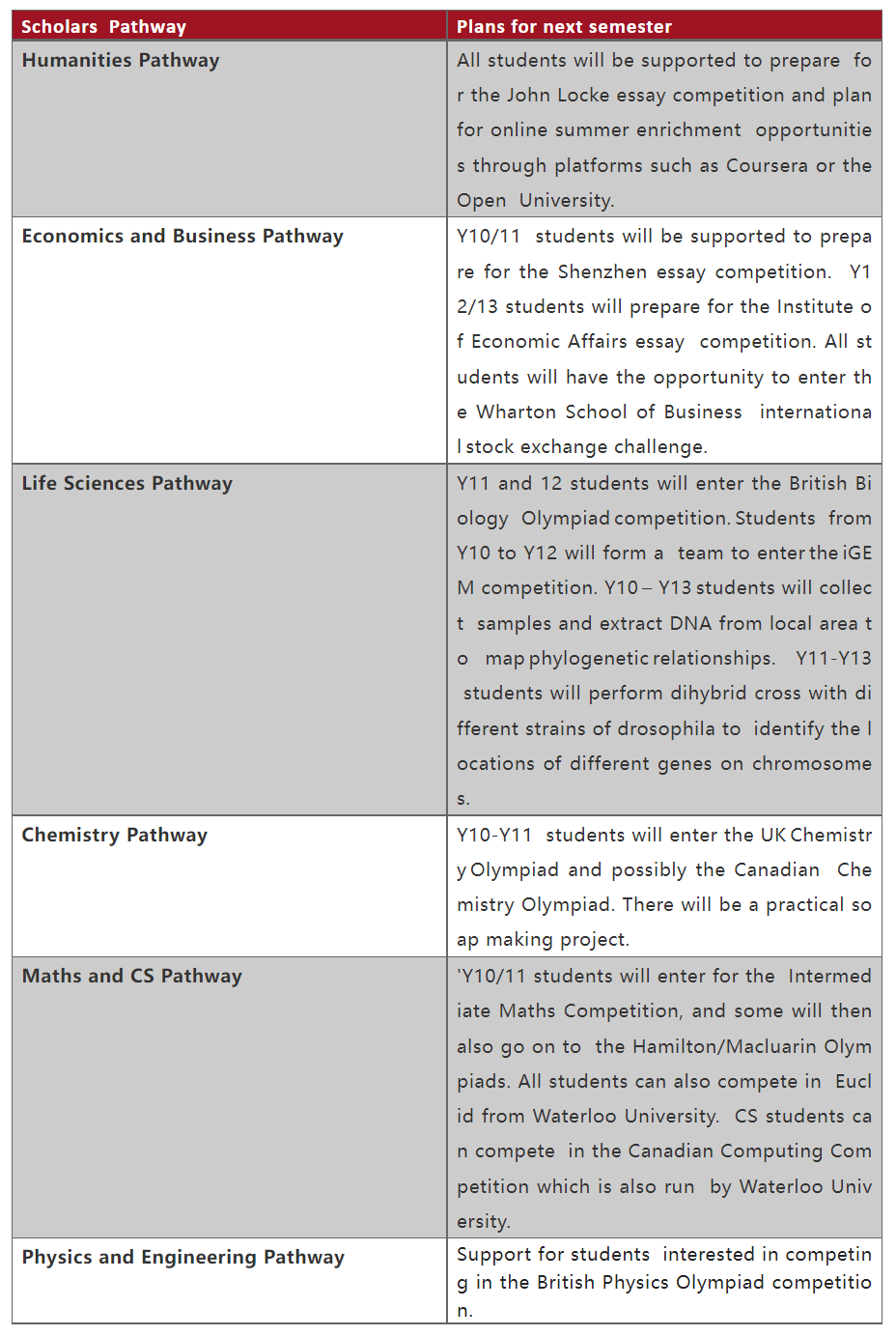
“The plan is to have a much greater role for student leadership in the Programme. There is a mixture of students starting in Y10, all the way up to Y13, and we are already moving some of the older students into leadership roles. In semester two, we are looking for tangible outcomes, like maths competitions. For example, I want every scholar on the humanities Scholars Programme pathway to enter the John Lock essay writing competition. We have been looking at soft skills in semester one, in semester two we will focus more on student agency and student empowerment as they use the skills they have developed in the real world as they showcase their writing skills.”
In truth, you cannot get admitted to Oxbridge or Ivy League schools without excellent written and spoken English skills. The Scholars Programme helps to develop these skills via significantly increasing exposure to English. Mr. Hodgkin explained bluntly that what the Scholar Programme is not doing: is not making promises. It isn’t about undermining our school counselling departments commitment to finding the best-fit universities for our students. It’s about making our scholars the best fit for elite universities.
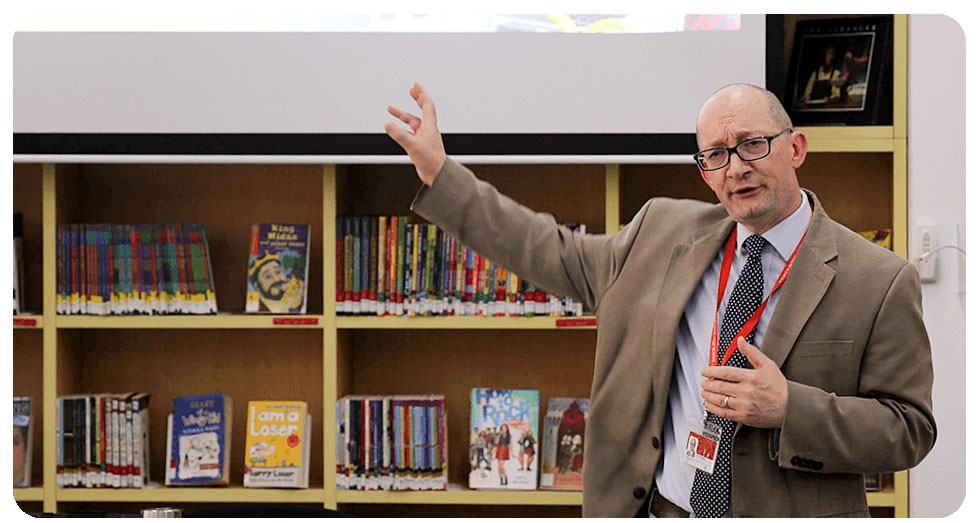
“We are polishing them, giving feedback and improving on the things that are already there.”
Mr. Hodgkin explained that the Scholars Programme was designed from the outset to be challenging:
“Challenging is good! Difficult is Good! Impossible is bad. We don’t want to depress our students with impossible tasks, we want to stretch them beyond their comfort zone, while we help and support them through this process. Everything should be challenging: The Speaking, thinking, listening, and reading. All of it should be challenging.
One of the questions that students ask me is, “Am I going to be kicked out of the Programme?” The answer is no. You’ll kick yourself out if it’s not right for you. There’s a natural rate of attrition. I haven’t made any false promises, we can’t promise Oxbridge entry, we cannot guarantee that. But what we can guarantee is an interesting journey, which will improve students and stretch them.”
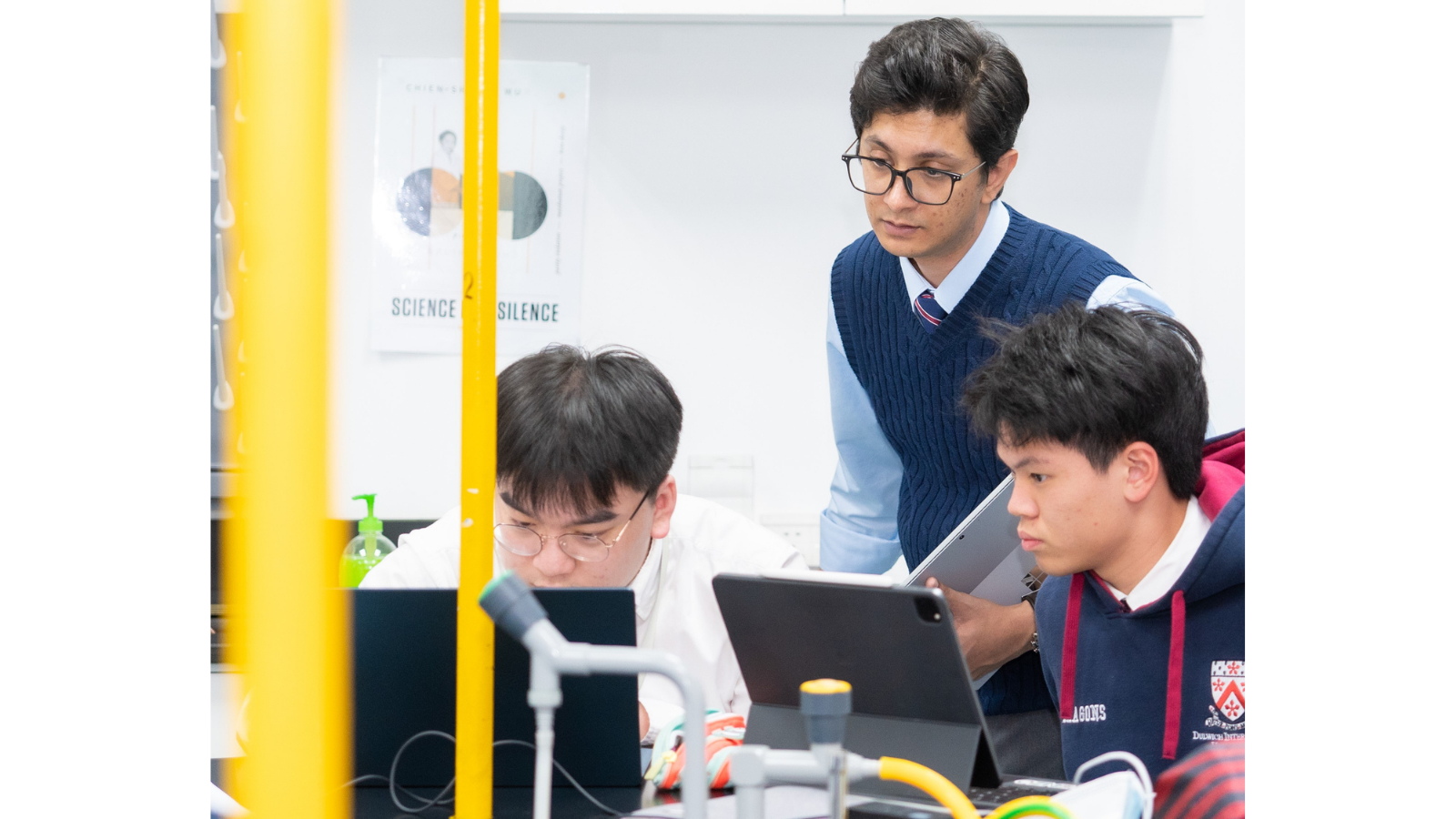
In the second half of the interview, we spoke to Mr. Hodgkin about his own experience at university. As an alumnus of Cambridge University himself (he read Geography at Fitzwilliam College, Cambridge) he has a unique and fascinating perspective on admissions to elite universities.
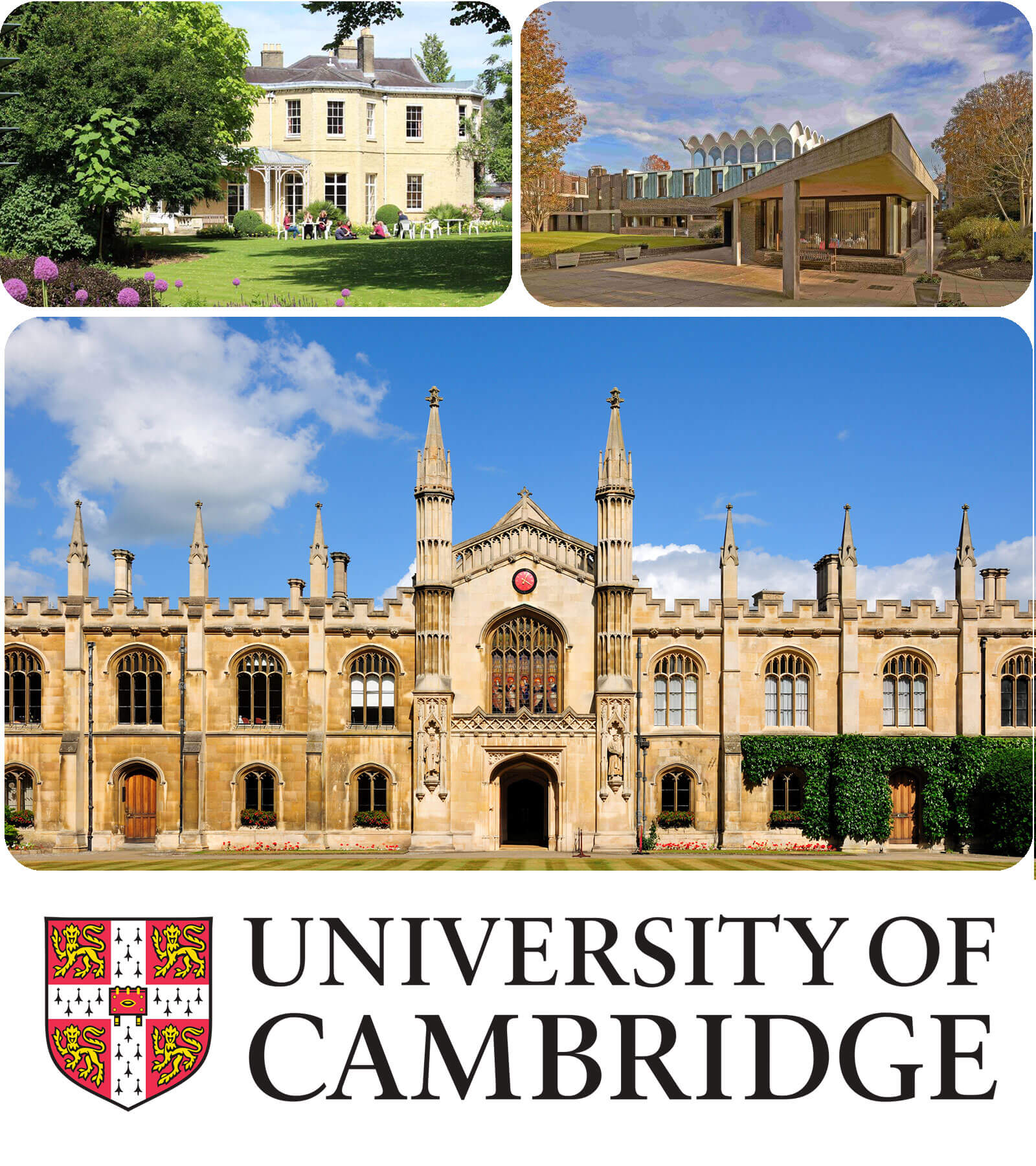
It is entirely fair to say that Mr. Hodgkin took a rather unconventional route to academic excellence. His educational background provides an intriguing “rags to riches” story. Mr. Hodgkin attended what is perhaps the worst performing comprehensive school in the worse performing in England and Wales:
“My own admissions experience is very odd. I grew up in the borough of Knowsley, on the outskirts of Liverpool, and this is one of the most deprived areas of the country. I studied at a failing school. It’s closed now, but when it was open, it was the worst-performing comprehensive school in the worst-performing local education authority in the country. They closed the sixth form while I was there, and for several years it was the only part of the country with no A-Level provision at all. I did my A-Levels in an adult education centre that was a 30-minute bus ride away. In Knowsley, around 98% of students never go to university.”

Mr. Hodgkin was completely upfront about the reason for his admissions success at Cambridge. It was his Knowsley postcode that got him noticed. It transpired that the admissions officers were actively looking for students that had achieved excellent grades in the borough of Knowsley, simply because you had to be an astonishingly gifted and talented student to triumph over such adversity.
When we asked him about his experience studying at Cambridge,
this is how he described it:
"It’s a very unusual environment… The terms are very, very short. It’s intense. You are not allowed to have a job or work. If they catch you working at Oxford or Cambridge, you get rusticated and sent down. The terms are as short as 10 weeks and you are expected to read and study continuously through each of those 10 weeks. You have to, to survive, in an extremely competitive environment. There are no dumb people at Cambridge. One of the things you notice when you go there is that the vast majority of people feel as if they have landed at the bottom of the class for the first time in their lives. It’s a humbling experience. You’ve got to be strong to apply, and you need to be strong to handle the workload and the reading, in a much more competitive environment than you’ll ever have experienced before.
The second thing is the teaching. This is done in very small groups of two or three students. So, you get to know your supervisor very well. This is something that is unique to Oxford and Cambridge and not really done in any other universities. The lectures are delivered to many hundreds of people in the lecture theatre, but the actual teaching is in much smaller units. The other strange thing is how Cambridge is connected to other universities, but not really connected to the world. Oxford and Cambridge are in towns, but there is almost no connection with those towns. Oxford and Cambridge are not England in a genuine way, they are more refined and much more academic."
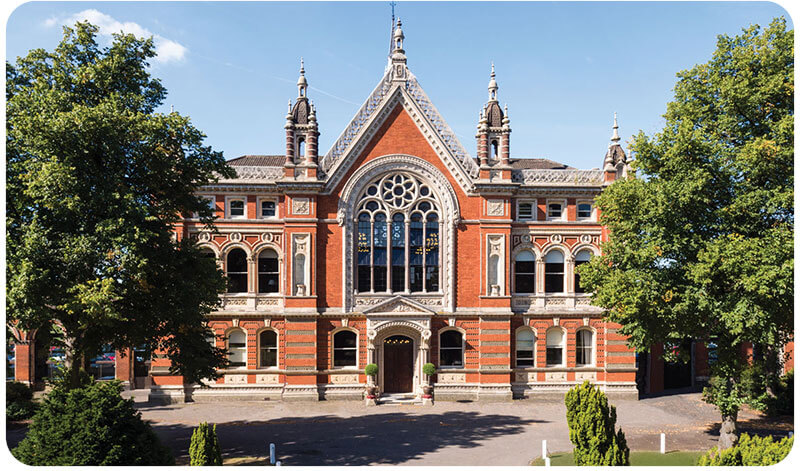
We finished the interview by discussing the tremendous support that Dulwich International High School Suzhou Oxbridge applicants have received from Dulwich College London:
“Dulwich College London made a very, very strong commitment, offering an online ten-week course of academic and interview preparation for Oxford and Cambridge, which many of our students participated in. The support they had from the College was amazing. We will know in January if the applications that our students have made to Oxbridge have been successful.”
It’s always a great pleasure talking to a passionate educator with a long-term focus on achieving the best possible results for our students. Mr. Hodgkin’s unique perspective on university admissions makes him ideally suited to coordinate the Dulwich International High School Suzhou Scholars Programme.
We very much look forward to following the progress of the Scholars Programme and seeing the results of this initiative over the next few years.
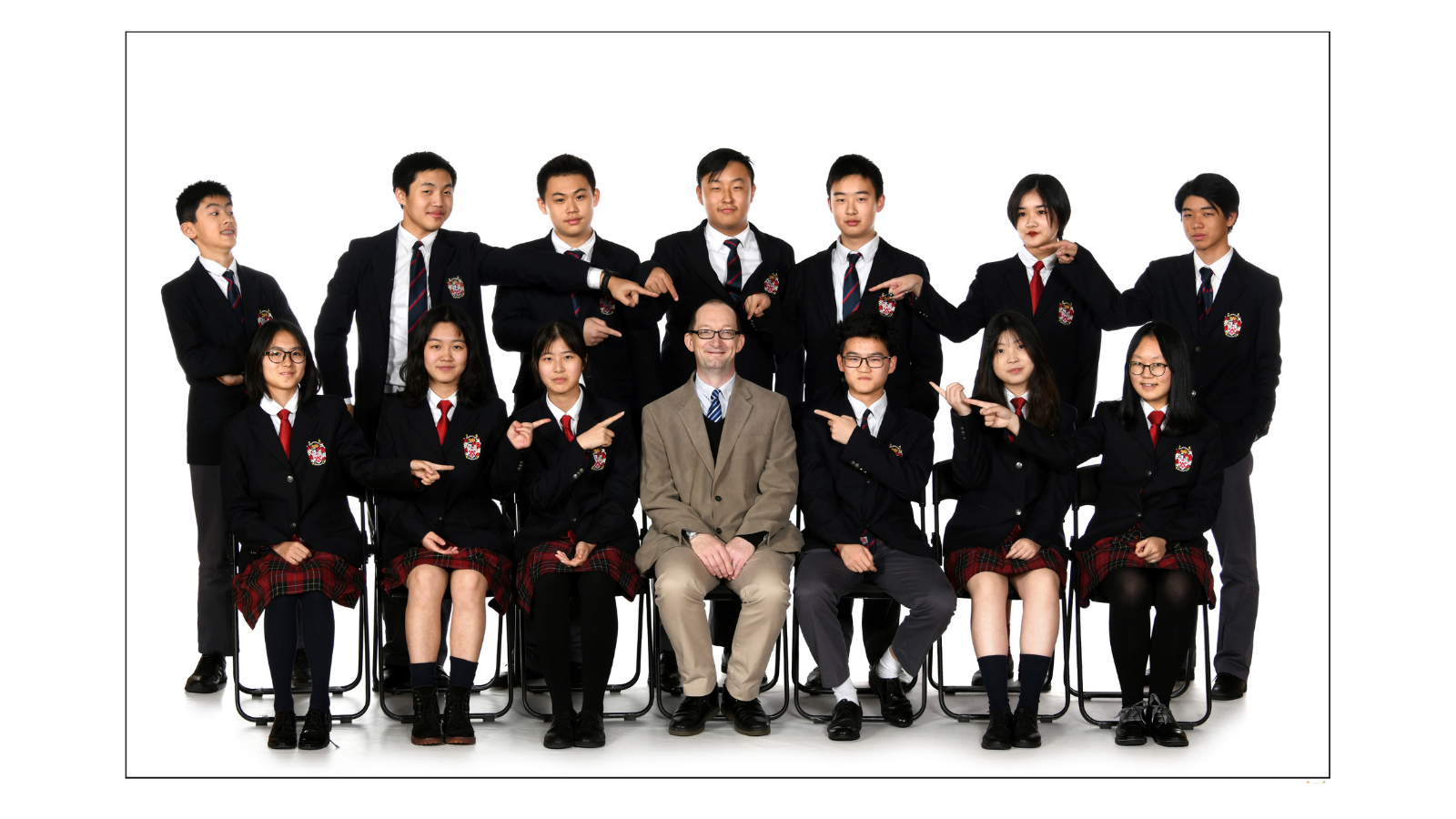
Planned activities for the Scholars Programme next semester