Learning Principles 2 | Richard Nunns, Stephanie Park & Martin Crozier


Learning Principles 2: Learners understand the purpose of their learning for the short, medium, and long term

Continuing our series focusing on the Dulwich International High School Suzhou Learning Principles, we believe that students learn best when they understand the purpose of their learning. This purpose extends far beyond simply passing exams and includes the development of skills, language, and character traits that will support the future development and success of students and university and beyond. When students understand the purpose of their learning, they are more engaged, more motivated and, as a result, more effective in their learning.
The overarching purposes of learning for students at our school are summarized in our ‘values’ and ‘aims for students’ that may be found in student planners. These include essential values, such as respect, responsibility and international-mindedness. They include essential understandings, such as that deep understanding involves the transfer of learning to new situations. They also include essential skills such as being reflective and being able to develop through successes, challenges, mistakes and failures.

As teachers plan their lessons, they carefully consider how to incorporate such learning purposes into their planning process. Teachers will consider aspects such as how to best embed English language and other skills; how topics are developed over time; connections to real-world applications; and connections to previous and future learning. Teachers then make these purposes explicit to students when the lessons are delivered and continually assess progress as the lesson progresses.
In year 10 drama, for example, students have recently adapted an Aesop’s Fable into an original theatrical work. Using a fable as a springboard, students brainstormed, outlined, wrote, edited, cast, practised, directed and performed a new piece of theatre. The purpose of these lessons included that students should understand the elements of play-writing structure; however even more important purposes were developing skills in creativity and risk-taking. Purposes of the learning also included communicative skills such as intentional use of a facial expression, body language, vocal inflexion, and interaction with others. As students developed the pieces over several weeks, learning aims were reinforced through reading, writing, conversations, and ongoing feedback from the teacher and student peers. Drama students very much value their development through this process, increasing their confidence to communicate, collaborate, and create. Indeed, when our alumni return to visit, they can clearly articulate the value of the transferable skills learnt through our drama programme.
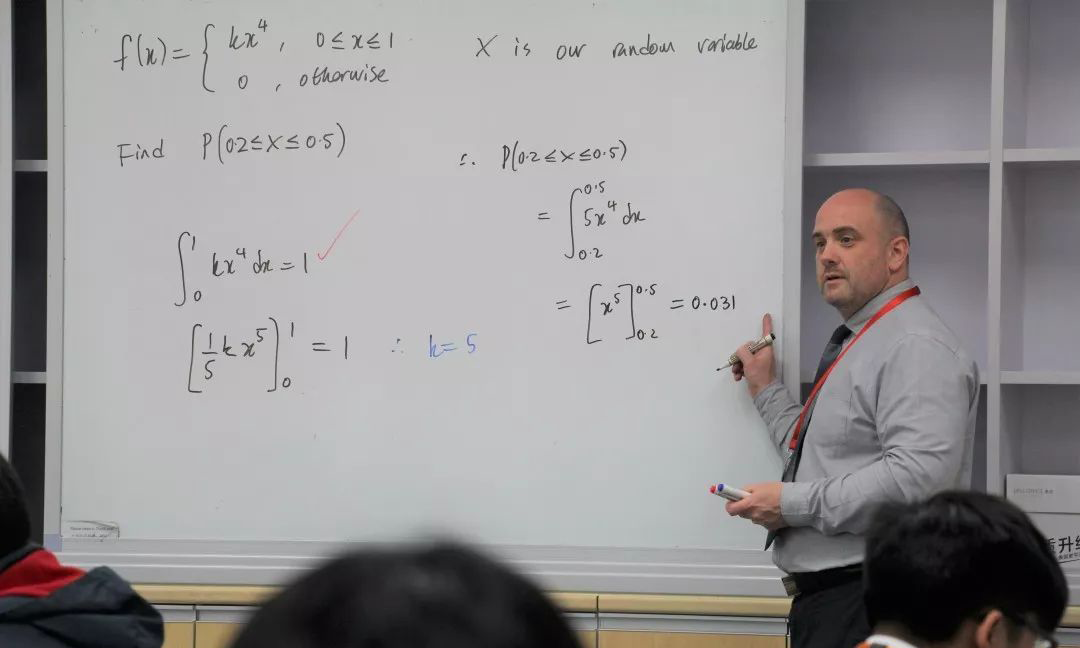
The purpose of maths at Dulwich International High School Suzhou extends far beyond the knowledge, understanding, and problem-solving skills that are required to pass the external exams. Starting with the STEAM project in year 10, students learn that maths is about far more than ‘questions and answers.’ Students become clear that maths starts with a ‘why’, that a range of skills and concepts are then needed to address the ‘how’, and that deep learning results from generalizing these concepts and skills to a wider context. In year 13, some advanced maths students undertake project-based learning (‘PBL’). Students choose a topic outside of maths, which is of interest to them, and research how mathematics is connected to that topic. The purpose is to develop the interrelations between disciplines whilst strengthening the application of maths knowledge, interpretation, and understanding. At the start of these projects, an entire lesson is devoted to explaining the theory and benefits of PBL – in particular, that process and skills are more central than the outcome.
When speaking with students about their learning, teachers explore what is learned in a real-world context outside of school, the value of developing universal skills in addition to specific content knowledge, and what the students themselves feel is important in their learning.
Parents can support this learning principle by talking with their child not only about what they are learning, but why, and reinforcing the crucial concept that learning is far more than just exam results. Rather than simply asking ‘What did you learn at school today?’ parents might ask ‘What skills did you work on today?’ and ‘How will what you have learned help you in the future?’