Ray W: Imperial College Offer Story

Welcome back to our offer story series and to kick off the Class of 2024, we caught up with Ray W, who has received the offer from Imperial College London to study Mathematics. Initially, we anticipated him to share outstanding academic achievements. However, as the interview progressed, we discovered that Ray embodies a plethora of talents, truly deserving the title of a "multi-talented"! Not only is he proficient in mathematics, but he also excels as a global contender in competitive testing. He is not just a budding poet but also a published author of his poetry collection. Moreover, his mastery extends to the piano, where he holds a Grade Eight certification from the Associated Board of the Royal Schools of Music.
Ray W (Y13) Received Offers:
Imperial College London - Mathematics
University of Warwick - MORSE
University of Manchester - Mathematics
The road to mathematics is not paved in a day
Ray's choice of applying to universities solely for mathematics major stems from both his passion and proficiency in the subject. Ray shared with us that his middle school education helped him laid a solid foundation in mathematics. However, it was his time at DHSZ that truly solidified his decision to pursue mathematics as a major. "Unlike the previous school, here I had more time to explore the subjects I enjoyed. In this process, I discovered my strong aptitude for mathematics, and I eagerly participated in various math competitions. Additionally, mathematics, being a popular discipline, offers excellent career prospects in the future."
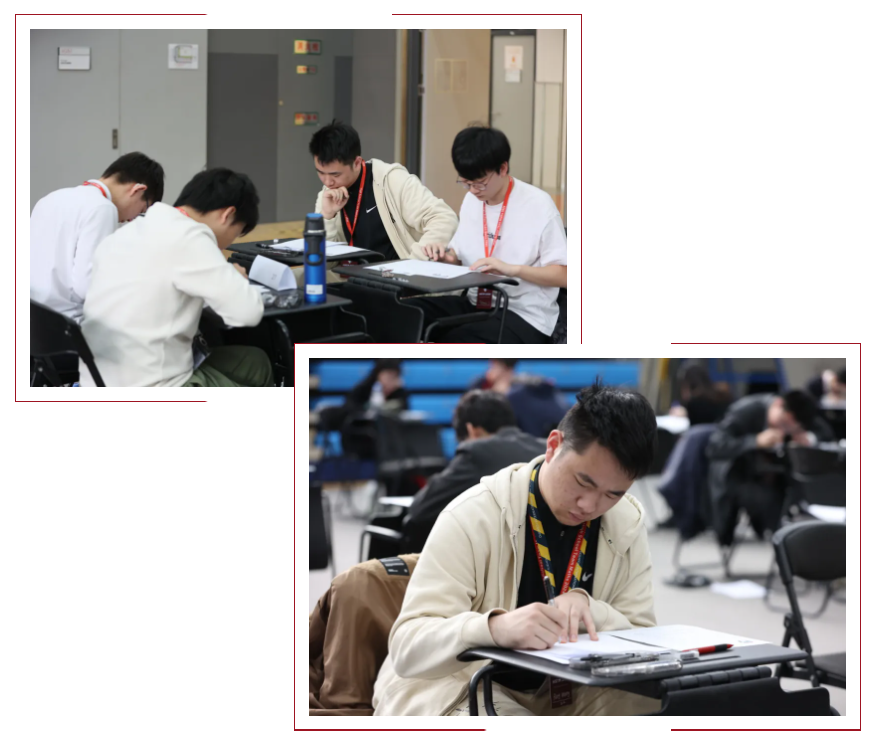
Reflecting on our initial encounter with Ray, it was during the High School Team Maths competition (HSTM) hosted by our school where we witnessed his passion and talent for mathematics over two consecutive events. Besides winning the Best Individual Award at HSTM, Ray cherishes his collection of awards from various mathematics competitions. His achievements include ranking in the top 7% globally in the Euclid Contest, obtaining a UKMT Gold Award, scoring 89 in the MAT exam, placing him among the top 120 globally, and many more. Despite numerous accolades, Ray believes that the greatest reward lies in the experience gained from participating in these competitions, which nurtured his mathematical and learning abilities. "During preparation, I would gather materials myself and read various math-related books, such as ‘Calculus’ by Princeton and Titu's ‘Number Theory: Concepts and Problems’.” Ray's interest in mathematics drives him to continuously explore knowledge beyond textbooks, enriching his understanding of mathematics and allowing him to appreciate the beauty of mathematics even more.
Grow in DHSZ
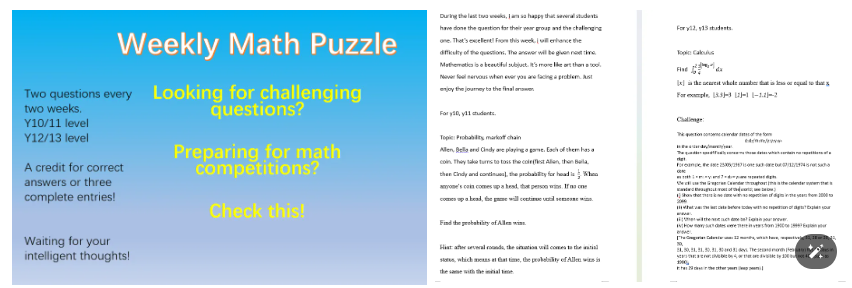
Looking back on his studies at DHSZ, Ray deeply feels that the learning environment here aligns closely with his needs. "Because the school grants us a high degree of freedom, if you have universities you want to attend, goals, and dreams, you can participate in many activities here, showcase talents, and hone skills." Earlier this year, Ray designed a "Weekly Maths Puzzle" on his own, published in the Student Bulletin distributed to all students, inviting those interested in mathematics to solve challenging maths problems together.
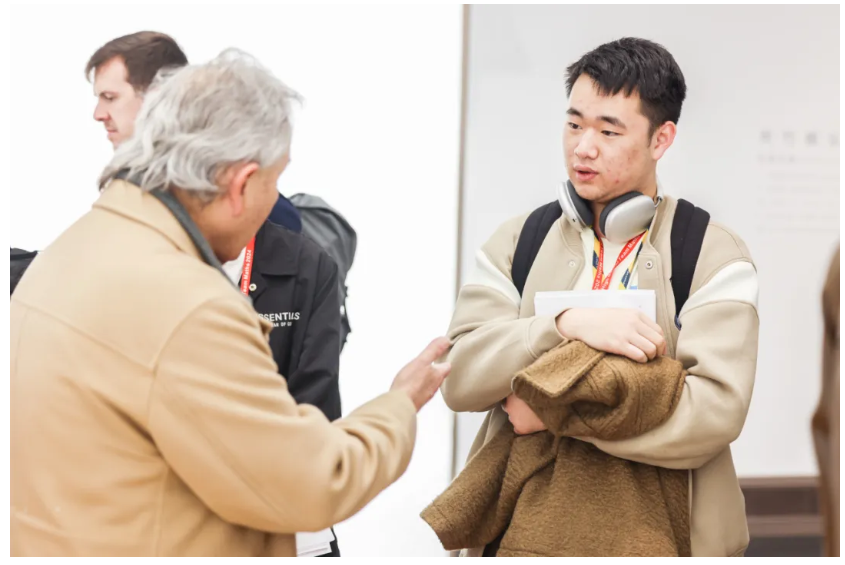
He also joined the Senior Maths Club, one of our CCA (Co-Curricular Activities) aimed at cultivating students' ability to apply mathematics in novel ways. In this CCA, Ray delved into the study of π and delivered presentations to classmates, covering topics such as Euler's formula, trigonometric functions, and other advanced concepts. Moreover, he eagerly engaged in discussions with teachers on deeper mathematical topics, whether it was discussing daily learning with mathematics teacher Mr Yusuf Csabai or exploring the intersection of mathematics and music with University of Toronto Associate Professor Mr Ron Lancaster during the HSTM event. Ray seizes every opportunity to appreciate mathematics, showcasing the qualities of a mathematician who loves to study and excels in research.
Of course, proficiency in mathematics is not the only trait Ray possesses; the more we chat, the more we discover that he is truly a "treasure boy".
Polishing Talent in Music
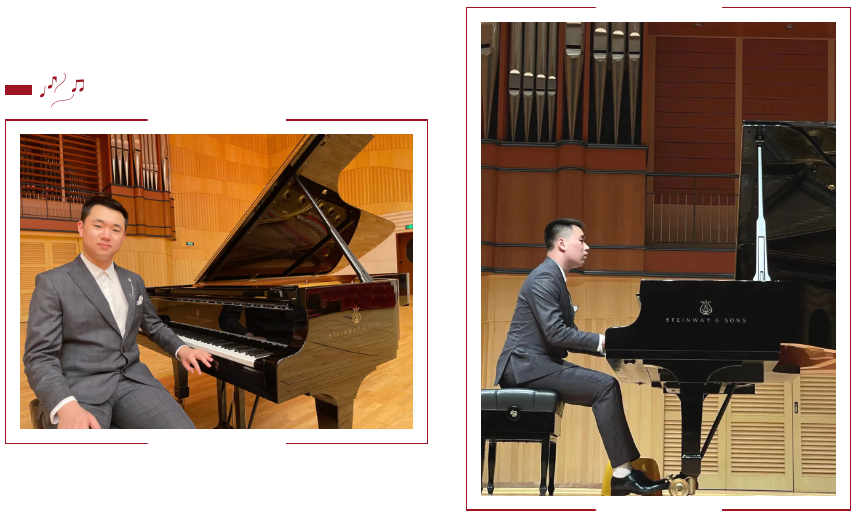
Ray embodies the spirit of "where there's a will, there's a way" in various aspects of his life, firmly believing that "as long as you persist, time will grind it into good results." Apart from mathematics, playing the piano is one of Ray's passions. In the past, due to academic pressures, he could only spare an hour each week to practice the piano. However, upon entering DHSZ, with better learning environment and support, he could devote more time to practicing daily. With fully equipped piano rooms and even pianos available in the dormitory common areas, Ray's diligent practice eventually earned him a "Distinction" in the ABRSM Grade Eight.
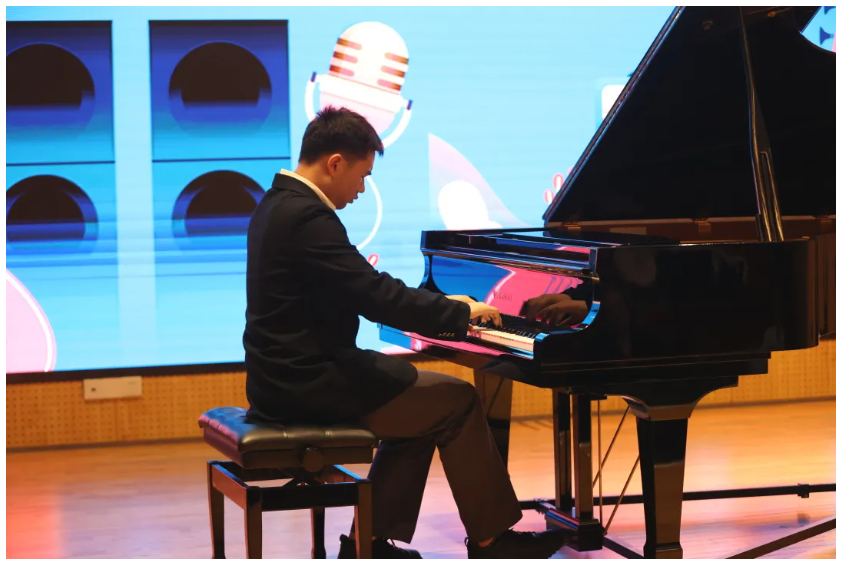
Ray explains to us that mastering this exam is no easy feat. "It not only requires proficiency in playing techniques but also demands accurate emotional expression from the performer, including aspects such as tone, style, and rhythm." Ray's dedication to music stems not only from personal interest but also from his recognition of the close connection between music and mathematics. He says, "Those who play the piano well generally excel in mathematics." He then provides vivid examples to clarify, "For instance, Bach's fugues require both hands to control three or four melodies simultaneously. To put it metaphorically, it's like singing three songs at once in your mind. This mirrors the utilisation of the brain in dealing with mathematical problems." Additionally, during discussions with Professor Lancaster at HSTM, topics such as Satie's compositions' relation to the Fibonacci sequence and Chopin's circle of fifths containing advanced mathematics further solidified Ray's understanding of the intricate relationship between mathematics and music.
Expressing through Poetry
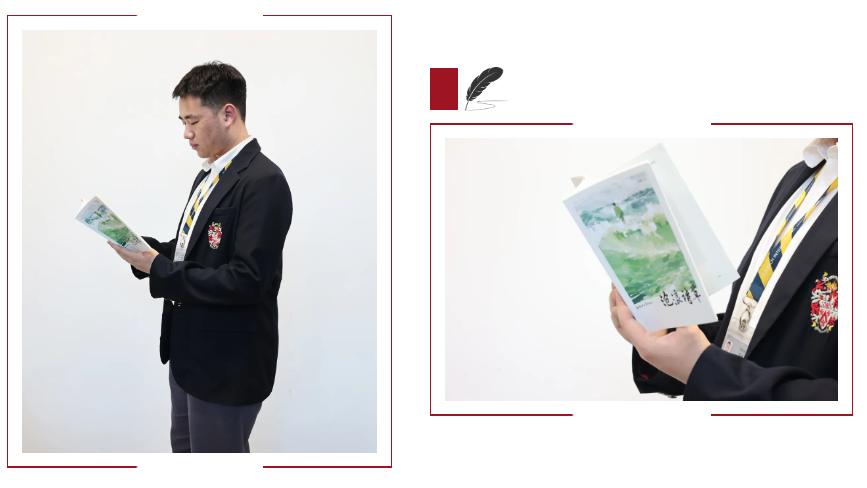
Recently, Ray has added a new achievement to his repertoire - the publication of his personal poetry collection titled "沧浪诗草." He tells us that behind this achievement lies the accumulation of time. At the age of 12, a sudden inspiration for poetry struck him, greatly encouraged by his father, which has kept him going ever since. Although his early works were more prosaic, studying the works of Tao Yuanming, Thoreau, and others gradually shaped his poetic style, focusing primarily on depicting scenery. His life at DHSZ provided Ray with more experiences, affording him more time and space to seize upon "images" to express his thoughts. For example, experiences such as Week Without Walls and mountain climbing with classmates provided him with ample inspiration. After seven years of creative accumulation, Ray eventually selected nearly a hundred poems, which underwent rigorous scrutiny by experts before being published as a collection.
In his view, he considers himself a poet. "Although it may seem a bit 'adolescent delusions ' from a certain perspective, it's actually a very serious matter because poetry not only represents my cultural identity - I love Chinese culture and consider myself a part of it - but also because I believe life is limited, whereas poetry can define the limited as eternal, much like the 'infinite' in mathematics, which is quite intriguing."
Learning Way in Kendo
If DHSZ provided a fertile ground for academic pursuits, piano practice, and poetry writing, enabling the already excellent Ray to flourish even more, then mastering the art of kendo became an unexpected gain for Ray after arriving at DHSZ. Since childhood, Ray had a fondness for playing with sticks, so when he learned that the school offered kendo and as a CCA, he joined without hesitation. After learning kendo, Ray realised that it is also a way of self-cultivation. "During a sword confrontation, you must maintain a dignified posture, and the true game between us starts before the swords clash. You need to observe the opponent's subtle movements, predict the direction of the strike, and prepare how to defend and counterattack." This series of "psychological warfare" exercises also elevated Ray's mental and spiritual strength. Ray's benefit from kendo is gratifying for us, as it provides students with the opportunity to explore unknown areas, ignite their interests, and achieve "unexpected gains," which is the significance of offering a diverse range of CCAs.
Studying mathematics, composing poetry, practicing the piano, learning kendo... Being able to seamlessly switch between so many specialties and hobbies is because Ray has a clear understanding of himself.
"My main focus is always mathematics, and I develop music, poetry, and kendo as interests." For him, poetry is a way to express emotions towards the world, while playing the piano serves as a means to alleviate study pressure. "Playing the piano is not practice for me, so I don't get tired. Instead, it helps me relax."
Mutual Selection with Imperial College
Reflecting on the university application process, Ray tells us about the invaluable guidance he received from his counsellor. "My counsellor, Mr Mark Coyle, provided me with tremendous help, offering professional guidance. For instance, when deciding which universities to apply to, he would analyse which ones were reach schools and which ones were safety schools, advising me to have a balanced selection."
Preparing for the MAT exam was also a memorable experience for Ray. "Top mathematics departments at world-renowned universities typically consider STEP or MAT scores. I chose MAT, but because of its rigorous standards, I prepared for it for six months. When I was under a lot of pressure, Mr Coyle would have one-on-one chats with me, reassuring and encouraging me to relax and to objectively evaluate myself."
Imperial College was impressed by Ray's countless shining qualities, and Ray's choice of Imperial College was also due to its outstanding reputation in academic, particularly in STEM fields. "As one of the world’s top universities, its mathematics department is renowned globally. Although I anticipate facing a lot of pressure, I am eager to embrace the challenge and will turn pressure into motivation, looking forward to continuously improving my professional knowledge!"
Ray's Advice for Lower School Students
Autonomous Planning: When it comes to further education, you must take more initiative. Teachers are your support, but many things you must do yourself. For example, you should explore university websites to understand the subjects you want to study and the course arrangements at different universities. University professors won't teach by hand, so stay enthusiastic and explore on your own after you have clarified your professional direction.
Time Management: You must concentrate when you study, but you also must learn to relax. Personally, I will do my best in the daytime, and after 3:30pm I will take a short break until the evening self-study time and then put in 100% energy, so that I can combine work and rest.
Explore the Unknown: Before coming to DHSZ, I was quite socially anxious, but after I started communicating with others, I realised that the world is so diverse and full of endless possibilities. So now I really enjoy communicating with others. As they say, "Brave people enjoy the world first!"