Student Behaviour and Conduct

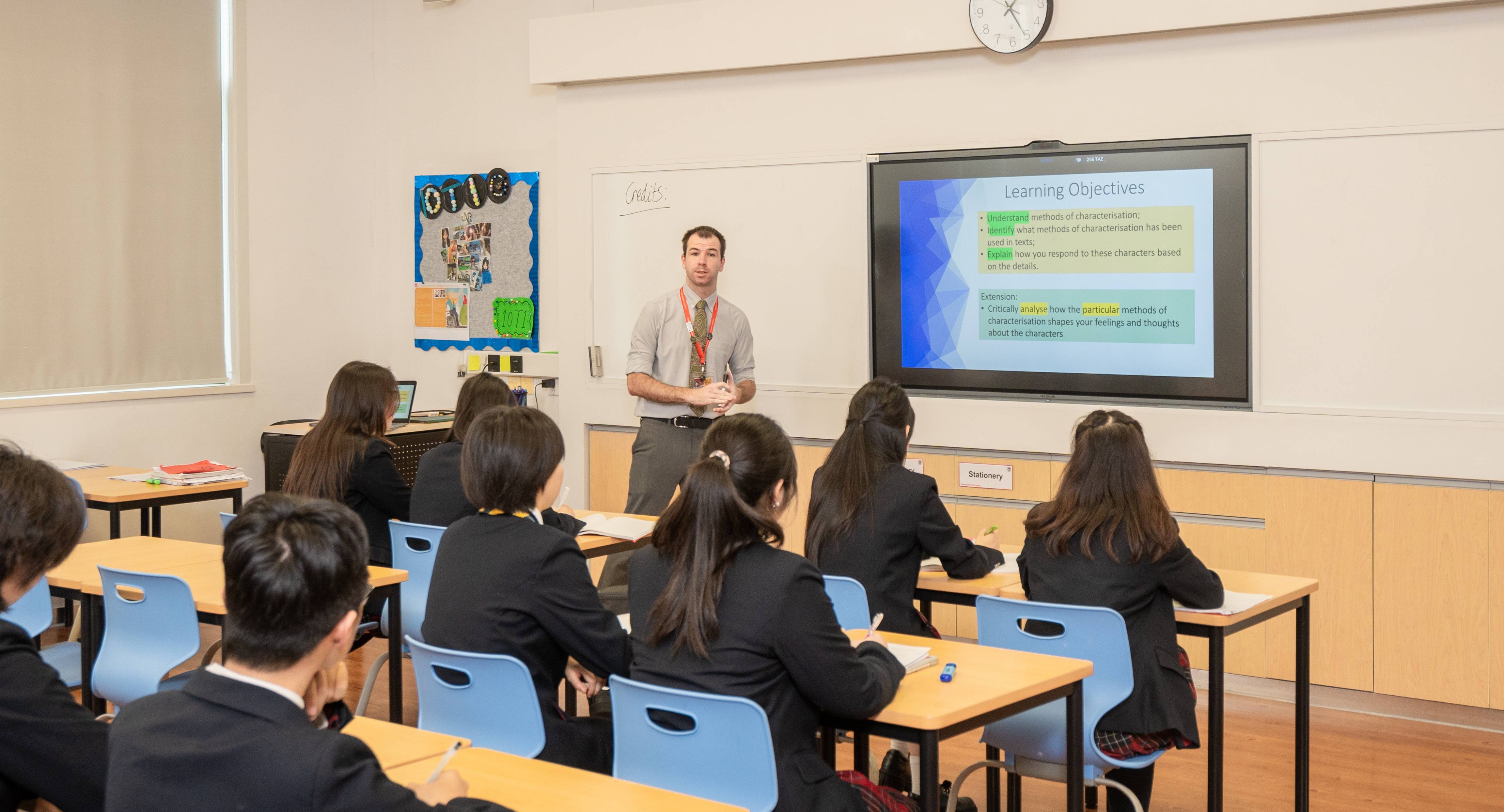
Specific behaviour and culture values at DHSZ
Behaviour at DHSZ is underpinned by the nine Dulwich Values. These values are shown in behaviours of the whole community as exemplified for the four core values:
Respect :
- We treat all members of the community in a way we would expect to be treated by others. This includes positive body language, using polite and positive language no matter who you are dealing with. We show respect by being inclusive of all groups of people no matter what their role, gender, race, or any other feature of their identity.
- When communicating in any language, we use key language such as 'please' and 'thank you' to show our respect for what others do for us.
- We show respect through listening to the opinions of others, no matter how different they are from our own.
- We have respect for the school environment as well as our own personal presentation, as it is also a vital part of belonging to a larger community, such as a school.
Responsibility :
- Punctuality, preparedness, taking control of your own learning are key aspects of taking responsibility. We also take all the opportunities given to develop our communication skills.
- We take responsibility for completing learning tasks both in and out of the classroom to the best of our ability.
- We seek out opportunities to further our learning and to develop our passions in inspiring ways.
- We responsibly use our connected devices to further our learning and accept the consequences of using them inappropriately.
- By speaking out when we see something that does not fit with our Dulwich values we contribute to the well-being of our whole community.
Integrity :
- Doing the right thing without the extrinsic motivation of being monitored by someone is key to showing the value of integrity.
- As a community, we own our mistakes by accepting responsibility for our actions.
- We should always approach each other with honesty and good intentions as well as honour our commitments to others in the community.
- We are conscious of the ethical and moral consequences of our actions and decisions.
Empathy :
- Empathy at its core is the ability to walk in another’s shoes and to base your own actions on how they may be feeling or acting. By having the ability to relate to and connect with others for the purpose of inspiring and motivating their lives.
- We show empathy by demonstrating kindness and sensitivity to others.
- We look out for members of our immediate groups and beyond.
- We challenge actions that may adversely affect others. We refrain from repeating information we have heard from others which could have a negative effect on anyone.
- As a community we are very diverse and need to accept the viewpoints of people from many different backgrounds and cultures.
Excellence :
- Excellence is achievable for everyone in the DHSZ community. What excellence looks like is different for everyone as we all bring different strengths, talents, experiences, and ideas to what we do.
- We complete every task to the best of our ability and strive to improve incrementally on previous performance.
- We act on feedback in all forms and from all sources to direct our efforts for continuous improvement.
- We celebrate success and excellence in all its forms and whoever achieves this success.
Collaboration :
- DHSZ is a community that works together as a large team with the purpose of achieving the best possible outcomes for students as well as the wider community. As such, we must all work together effectively in different ways depending on the situation.
- We embrace working in diverse groups to produce different outcomes, valuing everyone's ideas and opinions as we value our own.
- When working collaboratively we communicate with sensitivity to ensure that all members of the team always feel safe and secure.
Creativity :
- Creativity is a vital skill in all walks of life and for all members of the DHSZ community. It is characterised by recognising and valuing original ideas and deferring judgement of self and others.
- We show creativity by taking risks and embracing new experiences whether this be in the ways that we learn or in other pursuits.
- We recognise that creativity takes hard thinking and is a skill that can be developed by everyone.
- We are curious about everything and ask questions to promote our own generation of ideas.
Policy
Expectations of students at DHSZ
- Arrive at school before 7.50am, ready for lessons to start promptly at 8.00am.
- Students enter the class and are silent. Students quickly and purposefully prepare themselves for learning and follow the expectations set by their teachers in advance.
- Students sit where they are instructed to do so.
- Have no visible items such as mobile phones or earphones. Devices are confiscated if seen by teachers or used when not instructed to do so.
- Wear the correct uniform as per the DHSZ uniform policy.
- Not bring cigarettes, matches, lighters to school or smoke/vape in school. This includes e- cigarettes and all items which could be mistaken for e-cigarettes or vaping devices.
- Demonstrate excellent standards of good manners and respect to all members of the DHSZ community, which includes service staff as well as all teachers and students.
- Move around the school purposefully and allow others to do so, by not wasting time and crowding in corridors.
- Speak respectfully and listen to others refraining from abusive or hateful language which humiliates and degrades in English or their home language. This includes homophobic, racist, sexist, or disablist language.
- Do not use offensive words in any language no matter the context of the conversation or who might be able to understand.
- Have pride in their work and recognise the importance of perseverance and practice in the face of a challenge.
- Be truthful and honest when they have made a mistake or behaved in a negative way knowing that honesty is valued.
- Demonstrate the high standards of the school by being a positive role model both on the way to school and on the way home.
- Participate actively and positively in lessons, which means paying full attention to all tasks and not sleeping or putting heads on desks.
- Attend all lessons and be punctual. Students who are truant from classes can expect to be kept for detention. Each truanted lesson counts as 50% of one day towards the 20-day absence policy, beyond which students may not be awarded semester transcript grades.
- Queue up in corridors and the dining hall in an orderly fashion, respecting the time and space of others.
- Make sure that all litter and food waste is disposed of in the correct recycling bins or collection areas.
Expectations of students in PE class
In addition to the expectations above, all students should:
- Use the changing room only for the purpose of changing clothes and not for the storage of personal items or the misuse of substances, such as vaping.
- Be respectful of other people's privacy.
- Do not bring valuables into the changing room.
- No food or drinks in the changing room
- Do not take photos or videos in the changing room
- Students who are not participating in the lesson have roles and responsibilities in class and must attend their lesson as timetabled.
Expectations of students in Art lessons
In addition to the expectations above, all students should:
- Store all bags in the cupboards in the corridor. Don’t leave them lying on the floor.
- Make sure that all knives and sharp objects are stored securely after they are used, to protect themselves and other students.
- Make sure that all equipment and materials are cleared from workspaces at the end of each lesson.
- Use the Art rooms only when a teacher is present
- Not enter the store cupboard
- Clear away any spillage
- Not leave cups or containers in the sink
- Not pour chemicals down the sink
Expectations of students using Science classrooms/labs
- All students should leave their bags outside their classroom/lab. Bags should be stored in the cupboards and not left lying around on sofas or in the corridors.
- Only computers, water bottles, pens and stationery and notebooks are allowed in the laboratories.
- No food is allowed in the labs.
- Students should wear lab coats for wet lab work. They should wear goggles during experiments and always follow the instructions of their teachers.
- Lab coats are worn in the lab only and not taken outside.
Expectations of students in toilets
In addition to the expectations above, all students should:
- Always ask the teacher's permission to use the toilet during class time and return promptly to lessons.
- Use toilet spaces only for the purpose of using the toilet, and misuse these spaces for smoking, vaping, eating, anti-social activities, gaming or sleeping.
- Be considerate; use the toilet and leave.
Expectations of students online
In addition to the expectations above, all students should respect the values of DHSZ and the rules set down in the IT Acceptable Use Policy, which include:
- Not accessing or sharing sexually explicit, violent or offensive material
- Not accessing gaming or gambling websites or materials
- Exercising the same kindness and respect that all members of the DHSZ school community deserve.
- Not starting, not participating in and pro-actively reporting cases of online bullying
- Use AI tools ethically and thoughtfully. Not to use AI tools for academic malpractice, forgery, to create unkind images, videos or audio, or any other improper use of AI tools.
Students at DHSZ are empowered to make choices as school community members. However, when any member of the school community fails to live up to the values of our school, they may be held accountable for the choices they make. This is true for staff and students.
We recognise that young people will make mistakes. Many instances of misbehaviour provide learning opportunities that allow young people to learn more about themselves and the impact of their decisions on others. We aim to hold all members of the DHSZ community to the highest standards of behaviour and so establish a safe, respectful and compassionate community where we may all learn and grow together.
DHSZ supports members of the school community to live our values. Students are supported to develop themselves as individuals, and they must commit themselves to a process of self-improvement, reflection, and consideration for others.
The following are not acceptable and will lead to serious consequences. Where relevant local authorities will be informed.
This applies to the school campus, boarding houses, school trips, online or offline, when representing DHSZ externally or when in uniform:
- Consumption, possession, or distribution of: Drugs, tobacco, vapes or other related products or products which imitate vapes / Alcohol / Any form of alternative medical items / Pornography / Knives, cutters, imitation weapons, fireworks
- Violence, assault, hazing, bullying or any form of abuse, whether in person or online
- Sexual assault, violence, upskirting, sharing of consensual or non-consensual images or videos (sexting, nudes, semi-nude)
- Theft or borrowing without permission, possession or sale of stolen items
- Vandalism, Arson
- Defiance/insolence – refusing to carry out a direct request from any member of the school staff
Bullying can take many forms including:
- Physical – kicking and shoving, injuring or damaging other people's belongings, intimidation
- Verbal – taunts and name-calling, insults, threats or humiliation
- Emotional – behaviour intended to isolate, hurt or humiliate someone
- Indirect – rumour spreading
- Cyber – using any form of electronic means, mobile phones, social networks, gaming, chat rooms, forums or apps
Bullying in any form is unacceptable in our community. Any alleged incident of bullying will be investigated and confirmed instances will lead to serious consequences, including external suspension and a behaviour contract or more serious consequences after consultation with the Head. The Child Protection Officer (CPO) will always be informed any safeguarding implications will also be considered.
At DHSZ we use our values to communicate our expectations and our disappointments. Below are examples of how students may at times fail to live up to our values.
Respect:
- Failing to treat others with empathy and compassion
- Ignoring or isolating any member of the school community
- Failing to offer attention to school community members during presentations or assemblies
Responsibility :
- Missing deadlines
- Poor punctuality and attendance
- Truancy
- Unhygienic boarding room
- Welcoming day students into the boarding house
- Failure to swipe into school
- Failure to follow school uniform and personal presentation rules
Integrity:
- Lying
- Spreading rumours
- Cheating or Plagiarism
- Ignoring instructions and rules despite reminders or warnings
International mindedness :
- Racial stereotyping, hurtful comments about anyone regardless of their race, nationality, gender, sexual orientation, etc.
Collaboration :
- Not contributing to group work or academic tasks
- Failing to complete agreed tasks in boarding
- Failure to contribute to your CCA, House, Boarding or other school activity
Possible consequences :
- Restorative conversations: discussions aimed at building connection and shifting behaviour
- Mentoring programme: students must engage with a school assigned mentor
- Informal parent contact: over the phone or email
- Formal parent contact: written letter of communication with parents for repeated disappointments
- Engagement and completion of programmes, for example, smoking cessation
- Restorative action: action taken by the student that contributes to the school community positively
- Community Service
- Guidance from the deputy head
- After school detentions/Saturday morning detentions
- Behaviour agreements
- Internal suspensions or out of school suspensions (No more than 1 week): Serious or highly detrimental behaviours
- Guidance from the deputy principal of Legal
- For students who commit serious violations or fail to correct their behaviour after repeated disciplinary measures:
- Warning, Major Warning, Demerit/Academic Probation, or Required Withdrawal.
Escalating consequences:
- Up to 5 disappointments in a week (Thursday to Wednesday) : Students with 5 or more disappointments in a week (calculated from Thursday to Wednesday) will attend a Friday detention (30 minutes), including a restorative conversation; parents will be informed.
- A total of 15 disappointments : For any student will trigger a "Positive Behaviour Report" for a minimum of two weeks, as well as a Friday detention (60 minutes); parents will be informed.
- A total of 30 disappointments : For any student will trigger a second "Positive Behaviour Report" for a minimum of two weeks, as well as a weekend detention (60 minutes) with a senior member of the school leadership. Parents will receive a formal behaviour agreement from the school to allow their child to continue to be a member of our community.
Students with more than 30 disappointments will be monitored until a pattern of positive behaviour emerges across school life.
If a Year 13 student is added to a detention, they will lose their lunch and dinner pass for one week. This will increase by one week in length for subsequent detentions.
Students in all year groups who represent the school in sports or other teams, hold leadership positions, will be held to the highest standards. Any students who receive a detention will not be permitted to represent the school in sport or other competitions/events during the week immediately following the detention. Students may also not be eligible to attend school trips, concerts, or activities if they are in detention that week. The final decision rests with the Head of DHSZ and each case will be considered individually.
Teacher/ HOD detention :
- Staff/HoDs can keep pupils for a maximum of 25 minutes at lunchtime.
- Any member of staff wishing to set a detention for a pupil after school must log this on ISAMS Wellbeing Manager.
- If a pupil fails to turn up for a detention, this will need to be communicated to HOYs, who will then put the student onto a Friday afternoon detention. Teachers must insist that any pending work is completed regardless.
Pastoral detentions :
- This will take place every Friday afternoon from 14.55
- If a student fails to attend a pastoral detention, then they will need to make the time up the following week, parents will be notified and a Saturday detention will be applied.
Boarding detentions :
- Students in boarding may be issued a detention between 2000 and 2100.
- For Year 13 students, detention will also result in a loss of lunch and dinner passes.
Disciplinary responses
DHSZ seeks to maintain a safe and orderly academic community as well as to help individual students and their families confront behaviour that may be symptomatic of other difficulties. With these concerns in mind, the school employs a variety of personal counselling, disciplinary, and administrative responses.
When a student is approached out of concerns that have come to the School’s attention from student or faculty information of a general nature, we face a personal mentoring situation. When any direct information reveals that a rule or code violation has harmed someone else (e.g., stealing, harassment, providing drugs or alcohol), it may necessitate intervention of a disciplinary nature.
Warnings: A student may be given a warning as a disciplinary response. A warning is normally accompanied by assigned meetings with the HoY or AH to discuss and evaluate the student’s behaviour. A record is made in Wellbeing Manager on ISAMS.
Internal Suspensions:
Internal suspensions are serious disciplinary responses that are designed to provide an appropriate corrective environment without interrupting the student’s educational development. Students assigned to internal suspension should expect to receive a disciplinary agreement that will allow them to share in the decision-making and planning for implementation of changes in their behaviour. Students placed on internal suspension should expect to:
- be restricted to campus for the duration of their suspension–normally between 1-2 days.
- be assigned to community work, study halls, or detentions
- attend all of their classes/commitments.
- report for supervised study halls during all of their free periods and the following school day.
Internal suspensions are normally followed by a period of disciplinary probation (see below). Repeat disappointments of a serious nature may result in additional internal suspensions, but may also subject a student to either external suspension or dismissal.
Out of School Suspensions:
Under certain conditions, students may need to be temporarily removed from the DHSZ community, including from boarding. An out of school suspension is a serious disciplinary response and the school reserves the right to place conditions on a student's return to campus.
An external suspension has a normal duration of two to five school days. During their time away from the community, they are expected to focus on the issues which have led to their separation and produce a written request to return to the community. This request should demonstrate several things: an understanding of the seriousness of their infraction, a statement of how they used their time away from the School constructively, and a renewed commitment to the DHSZ Community.
In some serious cases, such as when a student's presence poses a danger to a person or property or poses an ongoing threat of disrupting the academic process, a student may be externally suspended pending a further disciplinary review process that may result in that student being dismissed.
When students return to school after a suspension, they will be expected to meet with the Principal(s) and/or School Counsellor to discuss what they learned from reflecting upon the situation and what restorative practices the student will complete to demonstrate their commitment to the school community.
Expulsion:
In all cases of violations of major school rules, dismissal from DHSZ may be the penalty. Final decisions regarding dismissal may only be made by the Head of DHSZ.
Any claims or settlements arising from absence, withdrawal, or dismissal are subject to the terms of the enrolment agreement between the school and the parents or guardians.
BEHAVIOUR AGREEMENTS
In some cases students will be issued a behaviour agreement in conjunction with their other consequences. At DHSZ we believe in working with our students, and that they can demonstrate their commitment to remaining a member of the DHSZ community through meeting the terms of a contractual relationship between the student and the School.
Receiving any behaviour agreement is a serious warning. It means that a student’s conduct has been contrary to the best interest of the student or of the School. The contract will clarify what commitment(s) the student will make in order to remain a member of our community.
In some instances, especially in the case of repeated violations, a behaviour contract will be issued in the form of a final warning letter. Because students on such contracts have already demonstrated behaviours that are not in the best interest of the community, violation of a behaviour contract is considered a major rule violation and will result in a disciplinary response. Violation of a final warning letter normally results in a referral for dismissal.
DISMISSAL OF STUDENTS FOR BEHAVIORAL REASONS :
The student who demonstrates major and persistent behavioural difficulties in the course of the academic day (Dragon Spirit Time, classes, around the school site, boarding etc.) and whose behavioural difficulties persist despite the recommendations of the referral team will be faced with dismissal for behavioural reasons.
DISCIPLINARY PROBATION:
As the result of serious or repeated disciplinary infractions or because of a more general concern that a student is out of sympathy with the goals and ideals of the School, a student may be placed on Disciplinary Probation (in addition to other warnings or probations).
A student on disciplinary probation:
- Will have any further violation of major school rules or repeated misconduct dealt with by the Administration, which may refer the matter to the Disciplinary Committee.
- While on disciplinary probation, a student’s behaviour is expected to be exemplary in all areas. All disciplinary probation cases will be reassessed every three weeks by the Principal/Head. Parents will be informed immediately when their child is placed on disciplinary probation. Students who do not earn their way off disciplinary probation may be subject to further disciplinary responses, including referral for dismissal
DISCLOSURE OF DISCIPLINARY ACTION:
It is the policy of DHSZ to report serious disciplinary infractions to colleges, educational programs, or other educational institutions to which the student has applied when, in the judgment of the School, it would be irresponsible or unprofessional not to do so. Those situations include, but are not limited to, the following:
- When forwarding information as part of the normal admissions process of the institution
- In response to a request from the institution
- When necessary to update or clarify information previously requested
- When a student leaves the school, withdraws, or is dismissed for disciplinary reasons before his/her Year 13
- When a student leaves the school, withdraws, is dismissed, or is suspended for disciplinary reasons during his/her Year 13
The disciplinary procedures outlined in this policy are intended to guide the Administration in reaching fair decisions. They do not confer any contractual rights on students accused of breaching the School’s standards of behaviour. As circumstances can vary greatly from case to case, the School reserves the right to modify these procedures in any particular instance in order to reach a fair and timely decision.
DISMISSAL OF STUDENTS FOR ACADEMIC REASONS:
Any student who demonstrates major and persistent academic difficulties as shown by low grades on progress reports, teacher records and observations, will be faced with dismissal for academic reasons. Final decisions regarding dismissal may only be made by the Head.