IGCSE Economics
ECONOMICS CAIE 0455
IGCSE Economics is an excellent introduction to the study and world of Economics, requiring no prior knowledge of the subject.
Course Aims and Content
The course aims to develop a thorough understanding of the principles and theory of global macroeconomics, as well as the principles of microeconomics that influence producers and consumers. Students study the economics of developed and developing nations and how they interrelate. Students will also develop an understanding of economic concepts and apply these concepts to real-life situations. By the end of the course, students are able to display knowledge and understanding of economic facts, definitions, concepts, principles and theories. They can select, organise and interpret data confidently, as well as draw conclusions from economic information, and critically evaluate economic data in order to make reasoned arguments and informed judgements.
The Course Covers the Following Topics
- The basic economic problem
- The allocation of resources
- Microeconomic decision makers
- Government and the macroeconomy
- Economic development
- International trade and globalisation
Course Assessment
The course is assessed by two components, set and marked by CAIE during May/June of the second year. Paper 1 consists of 30 multiple-choice questions where students must complete in 1 hour. Paper 2 is a written paper of structured questions that include a compulsory data response question and three questions from four. Students must complete it in 2 hours. All papers are externally assessed.
The Dulwich Advantage
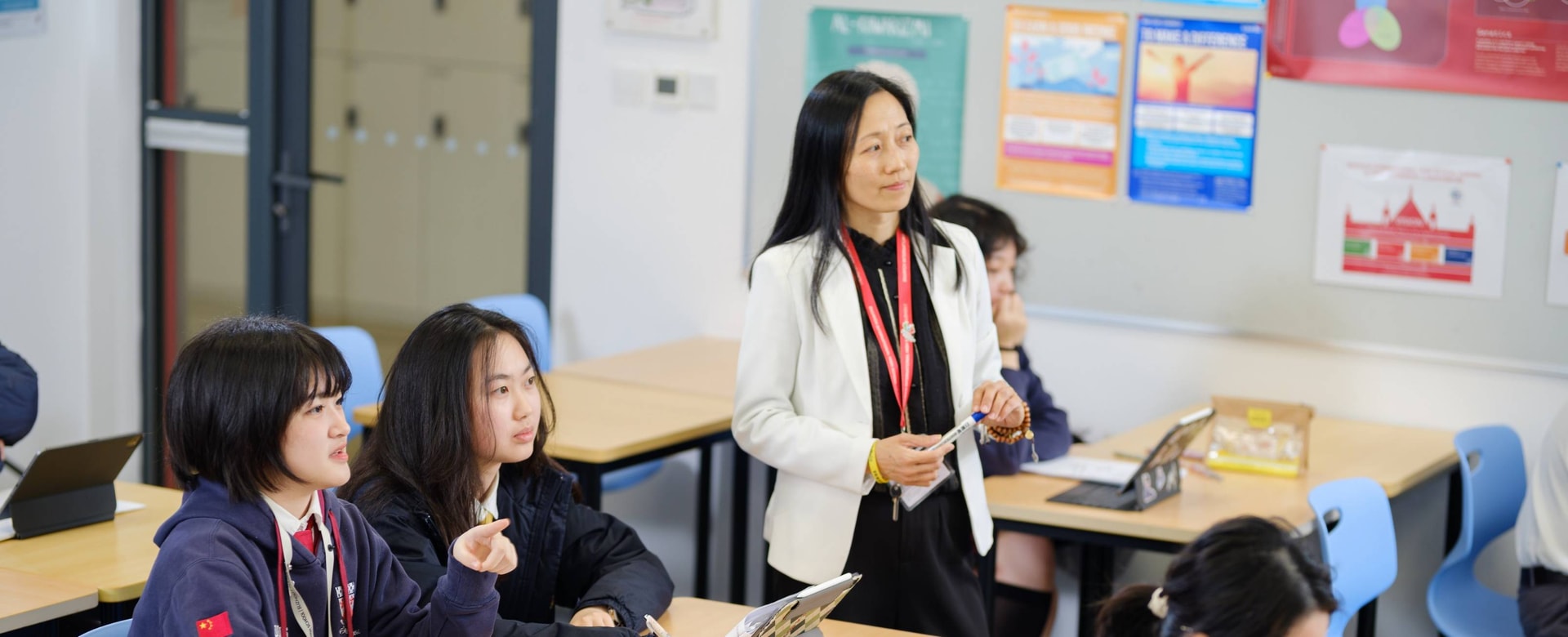
Our Economics teachers expertly guide students on how to learn efficiently and take responsibility for their learning in a discussion-based setting. Teachers support students by deepening their understanding and developing higher-level skills of application, analysis and evaluation that will greatly help them as they progress through the school. Alongside the IGSCE syllabus, lessons focus on developing collaboration and communication skills, both of which are essential to study and work. Students will have opportunities to visit a variety of organisations, where they will learn outside the school environment. This will enable students to understand how economic concepts are used and applied in practice. Economics-related co-curricular programmes include Model United Nations (MUN), National Economics Challenge (NEC), AmplifyME Financial Simulation Workshop, EPQ and Entrepreneurship Club.