DHSZ Alumni Talk|Clara Zhang

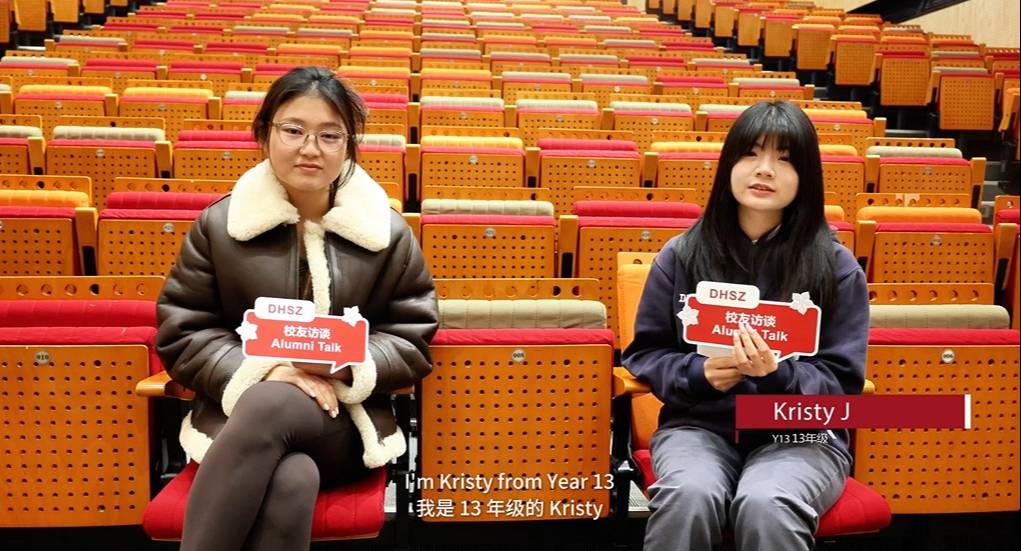

The DHSZ Alumni Talk Series captures the real journeys of our graduates as they move from campus into the wider world, showcasing their exploration and growth across diverse fields. Whether in academia, career pathways, or personal milestones, each story reflects the enduring spirit of a Dulwich education.
This year, we take the conversation a step further by inviting current students to join the production team as student interviewers. Through their questions and perspectives, they engage alumni in meaningful dialogue and bring a renewed sense of relevance and resonance to the series.
This Episode
When Year 13 student Kristy sat down with DHSZ alumna Clara Zhang (Class of 2017) for our latest Alumni Talk, she expected to hear about university applications and career options in Psychology. What unfolded instead was a thoughtful conversation about healing, creativity, and the quiet courage it takes to listen deeply to both data and emotion, both mind and body.
Clara's journey has taken her from research labs at UCLA to inpatient psychiatric units for teenagers, from student theatre societies to leading her own theatre collective at NYU. Through all of this, one thread runs clearly: a commitment to understanding how people hurt, how they cope, and how they can begin to heal.
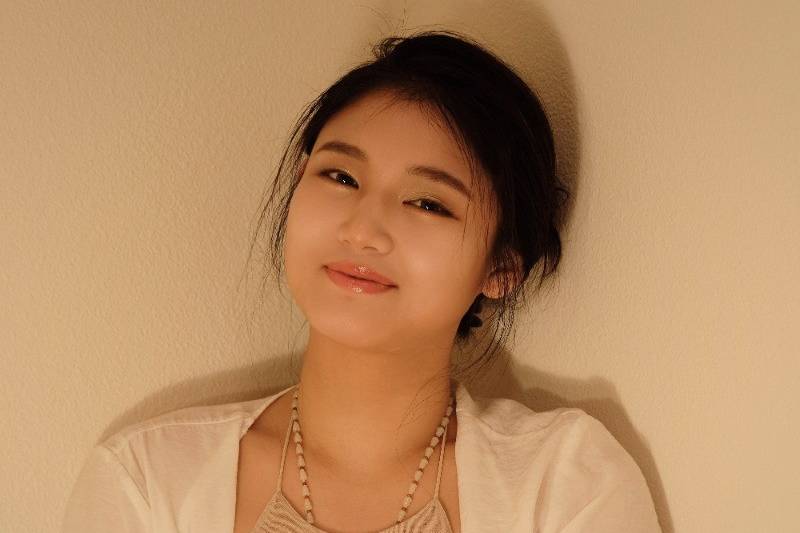
Clara Zhang|DHSZ Class of 2017
- BA in Psychology with minor in Statistics, University of California, Los Angeles
- MA in Drama Therapy, New York University
- Registered Drama Therapist (P-RDT, LCAT-LP), Seattle
From Psychology and Statistics to Understanding How the Mind Works
Clara’s academic story began at DHSZ and took shape in the United States. After graduating from DHSZ in 2017, she went on to study Psychology at UCLA, with a minor in Statistics. Looking back, she does not see Statistics as a detour, even though her current work is no longer centred on numbers.
“I wouldn’t say statistics was a wrong path,” Clara reflects. “It told me how my brain works. I realised I enjoy working with people and connecting with people more than just telling stories with data. But the research skills were beneficial, both in graduate school and in my work now. I know how to approach different questions and dilemmas, and I know how to conduct research myself.”
During her time at UCLA, Clara worked at the DiSH Lab (Dieting, Stress, and Health), first as a Research Assistant Apprentice and later as a Project Manager Apprentice. These roles trained her to think critically about evidence, methodology, and how the body carries long-term effects of experience. That foundation, she explains, still shapes the way she sees her clinical work.
When the Body Remembers: From Lab to Clinical Practice
In her current roles, including Drama Therapist and past clinical positions in New York and California, Clara works extensively with people who have experienced trauma.
What continues to strike her is the gap between what people can explain and what their bodies still hold.
“Cognitively, they may have processed what happened to them,” she says. “But their bodies remain tense, or you notice particular breathing patterns when they are processing trauma. Trauma is very complex in psychology, especially when you study how it gets triggered.”
This is where her training in drama therapy comes in. Rather than relying solely on talking, her sessions invite clients into movement, role-play, and embodied expression.
“There is often a gap between talk and actual action. Drama therapy bridges that gap,” Clara explains. “We might be working through a conflict with parents, for example. Instead of only describing it, we use props, chairs, our bodies, we get into movement. In psychology, you can think of it as building a bilateral connection between the right and left brain, using action to bridge the gap and facilitate real-life change.”
Drama therapy, then, is not a rejection of research or theory. It is a form of applied psychology that honours both insight and embodiment.
When Two Paths Meet: Research and Theatre
During her undergraduate years, Clara felt as though she was walking two separate paths. On one side was lab work at UCLA, analysing data and designing studies. On the other was student theatre, where she served as Actress, Director, and Stage Artist with the Cfan Chinese Theater Group, eventually becoming its Vice President.
“Lab work was one path,” she recalls. “Drama and theatre club were my night-time routine.”
It was only during her graduate studies at NYU’s Drama Therapy programme that these strands started to weave together.
“Drama therapy is a field that combines psychological research and theatre practices. In grad school, they began to come together. Now that I am in a more clinical field, I work much more directly with people, so the lab part has stepped back a little to make room for clinical work. But I hope to bring research back in more in the future.”
Her leadership extended beyond the classroom. At NYU, Clara founded and served as President of MOU Theatre, a student-led theatre group. There, she continued exploring how performance, identity, and healing can intersect, especially for communities whose stories are often underrepresented.
Clara traces a decisive turning point back to the COVID-19 pandemic. At that time, she was working in a field unrelated to Psychology or Drama. The work felt draining and disconnected from what mattered most to her.
“I felt like I was being emptied out. Every day was difficult to get through,” she says.
As she revisited potential graduate programmes, a memory from her UCLA days resurfaced. A professor once asked her: “If I gave you ten billion dollars to conduct any research in the world, what would you study?”
Her answer then had been simple and deeply personal: “I want to find out why theatre feels so therapeutic to me.”
Following that thread, she discovered the Drama Therapy MA at NYU and the work of programme director Nisha Sajnani, who works with refugees, women, children, and immigrants.
“Her work showed me how theatre and psychology could combine so well with one another. That was when I realised this is not something I imagined; it is an established field. Maybe I could walk this path.”
Telling the story, Clara remembers calling her mother in China to share the news. “My mum said, ‘No one has heard of this here. What are you going to do after graduation?’ And I just found myself crying. I said, ‘Mum, I think this is my calling.’”
It was not the safe or predictable route. But it was honest.
Working with Trauma: Empathy, Boundaries, and Supervision
Today, Clara’s clinical work includes supporting teenagers in inpatient psychiatric units and clients in community and outpatient settings. The emotional weight of such work is real, and she is frank about how challenging it can be to balance empathy and boundaries.
“I am a very sensitive and empathetic person,” she says. “Boundary-setting is an ongoing topic I need to explore and practise.”
She emphasises the importance of structure and supervision, especially in the United States context.
“There is a list of ethical codes and practice guidelines that you need to follow. Knowing that I have a system I can rely on feels safer. And as a supervised practitioner, I can always go to my supervisor for advice and for another pair of eyes.”
Her answer is a powerful reminder that therapists are not removed from vulnerability; they work within it, with support and frameworks, rather than outside it.
Creativity, Pressure, and Asian Families
Clara’s work also offers her a particular window into how cultural expectations shape mental health. When asked how parents can help young people use imagination and creativity as positive coping strategies, she highlights a recurring pattern among many of her Asian clients.
“My only piece of advice is: do not push too hard. Creativity and imagination need to flow.”
She describes an internalised “voice of authority” many clients carry into the therapy room. “One of the main issues they encounter in drama therapy is this voice telling them, ‘You are not doing it well enough. You need to try harder.’ This voice is very strong and deeply ingrained from childhood, in school and at home.”
Her message to parents in the Dulwich community is gentle but clear: “Loosen up. Let it breathe. Do not push too hard. Give their creativity space to exist.”
For a community that values academic excellence, her words offer an important counterbalance: excellence in thinking and feeling also requires room to experiment, play, and fail safely.
Remembering DHSZ: Choices, Theatre, and Being Seen
When asked what feelings come back first when she thinks about DHSZ, Clara smiles. “It was a lot of fun,” she recalls. “There were many options. You could choose your own coursework. There were opportunities for clubs and student leadership, which really helped me in my later years.”
One of the most formative spaces for her was the drama classroom. “When I think about ‘expression helping people feel seen’, I go back to drama class in high school,” she says. “The coursework was designed so that we wrote our own piece each semester. We had to be the playwright, the director, the actor, all the roles you would see in a normal production.”
That experience, she believes, planted the seeds for her current work. “The creative devising process really helped me. It is something I still use today, both in my personal work and as a hobby.”
If she could speak to her Year 10 self, her advice would be simple: “Keep it going. It is going to be fine.”
A Story That Expands What Learning Can Mean
At DHSZ, we often speak of holistic education and Graduate Worldwise. Clara’s story makes those words tangible. It shows us a young professional working at the intersection of science and art, of data and emotion, of individual healing and community care.
Her path is not linear, nor is it conventional. But it is thoughtful, responsible, and deeply human. And in many ways, that may be exactly what a Dulwich education hopes to make possible.
What Clara embodies is a kind of learning that does not fit neatly into subjects or disciplines, a learning shaped by curiosity, empathy, and the willingness to follow difficult questions wherever they lead. She reminds us that intellectual rigor is not separate from emotional insight, and that creativity is not simply an artistic skill, but a way of approaching complexity with openness.
Her journey also reflects the quieter, long-term impact of school experiences: the freedom to choose one’s coursework, the confidence gained from leading within a community, and the transformative power of courage to express one’s own voice on stage. These early foundations allowed her to integrate research with theatre, science with story, and ultimately build a career centred on healing and human connection.
For the Dulwich community, Clara’s story offers a glimpse into what education becomes when students are given space not only to achieve, but to explore: to ask, to create, to imagine, and to grow. It is a reminder that the purpose of learning is not just to reach a destination, but to cultivate the wisdom to navigate whichever path comes next.